
What Problems Does Whole Home Water Filtration Solve?

Whole home water filtration is designed to improve the quality of water entering your house—before it reaches your faucets, showers, appliances, and plumbing. Instead of filtering water at one sink or appliance, a whole home system treats every drop of water used throughout your home.

For many homeowners, water-related problems are subtle at first. Over time, they show up as appliance failures, plumbing issues, skin irritation, poor-tasting water, and unnecessary expenses. Here are the most common problems that whole home water filtration solves.

Hard water mineral buildup on household fixturesHard Water Scale and Mineral Buildup

Hard water contains high levels of dissolved minerals like calcium and magnesium. As water is heated or evaporates, these minerals harden into scale inside pipes and appliances.

Whole home water filtration helps solve:

  • Mineral scale inside plumbing and water heaters

  • Reduced water flow and pressure

  • Inefficient appliances that consume more energy

  • White residue on faucets, fixtures, and glassware

By treating water at the point of entry, whole home water filtration systems reduce scale before it can damage your home.


Chlorine Taste, Odor, and Chemical Exposure

Municipal water supplies often use chlorine or chloramines to disinfect water. While effective for sanitation, these chemicals can negatively affect taste, smell, and comfort.

Problems caused by chlorine in household water include:

  • Strong chemical taste and odor

  • Dry skin after showering

  • Brittle or damaged hair

  • Fading clothes and towels

Whole home water filtration removes chlorine before it reaches your kitchen, bathrooms, and laundry—improving both drinking water and shower water quality.


Whole home water filtration protects appliancesAppliance Damage and Shortened Lifespan

Water quality directly impacts every appliance that uses water, including:

  • Water heaters

  • Dishwashers

  • Washing machines

  • Ice makers and coffee machines

Unfiltered water leads to mineral buildup, corrosion, and clogged components. Whole home water filtration protects appliances by delivering cleaner water to every system, helping extend their lifespan and reduce repair costs.


Dry Skin, Hair, and Scalp Irritation

Many homeowners notice one of the biggest improvements from whole home water filtration in the shower.

Filtered water can help reduce:

  • Dry, itchy skin

  • Scalp irritation

  • Dull or brittle hair

  • Soap and shampoo residue

Removing chlorine and other harsh contaminants makes water gentler for daily bathing—especially important for sensitive skin.


Sediment, Rust, and Discolored Water

Sediment and rust can enter your water from aging infrastructure, well systems, or municipal supply lines.

Signs of sediment issues include:

  • Cloudy or brown water

  • Grit in sinks or bathtubs

  • Stained fixtures and toilets

  • Clogged faucet aerators

Whole home water filtration captures sediment before it spreads throughout your plumbing and fixtures.


Inconsistent Drinking Water Quality

Many homeowners rely on bottled water or under-sink filters, which only address one location.

Whole home water filtration improves:

  • Taste and odor throughout the house

  • Water used for cooking and ice

  • Baseline water quality for additional systems like reverse osmosis

This creates consistent water quality at every tap—not just one sink.


Hard water mineral buildup in house pipesPlumbing Corrosion and Long-Term Damage

Certain water contaminants can accelerate corrosion inside pipes and fittings, leading to leaks and costly repairs.

Whole home water filtration helps reduce:

  • Internal pipe corrosion

  • Pin-hole leaks

  • Premature plumbing failure

  • Risk of hidden water damage

Protecting water quality at the entry point protects the entire plumbing system.


High Maintenance and Chemical Dependency

Modern whole home water filtration systems are designed to be low-maintenance and chemical-free.

Many systems:

  • Operate without salt

  • Require minimal ongoing service

  • Avoid wastewater discharge

  • Treat the entire home automatically

This makes whole home water filtration a long-term, hands-off solution for better water.


Whole home water filtration system will your home's water for a better cooking experience One System. Total Home Protection.

Whole home water filtration addresses water problems at the source—before they affect your appliances, plumbing, skin, and daily life.

By installing a whole home water filtration system, homeowners can:

  • Protect plumbing and appliances

  • Improve taste and odor

  • Reduce scale and staining

  • Enjoy better showers and laundry

  • Extend the life of their home

If water impacts everything in your home, it makes sense to filter it everywhere.

How to Choose Between a Water Softener and Water Conditioner


Choosing the right water treatment solution for your home can be a daunting task, particularly if you’re not familiar with the differences between a water softener and a water conditioner.

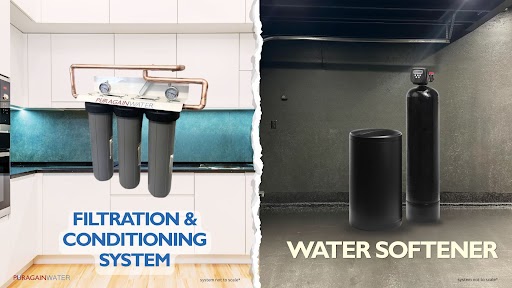
A water softener removes hardness minerals like magnesium and calcium from the water supply and scale build-up, while a water conditioner modifies the minerals’ structure to prevent them from sticking to surfaces, these provide quality water for your use.

To make an informed decision, it’s crucial to consider factors like the water supply quality, the volume of water usage, plumbing fixtures, and the presence of harmful contaminants such as organic compounds.

You may also need to weigh the pros and cons of salt-based and salt-free water softeners or the different types of water conditioners like magnetic and electronic, and their regeneration process, installation, and maintenance costs.

Navigating the Differences Between Water Softeners and Water Conditioners

Water softeners and water conditioners are two different types of water treatment solutions that address hard water issues. If you are struggling with a buildup of minerals from water, soap scum, or spotty dishes, then you may need to consider investing in a water treatment solution.

Water softeners use the ion exchange process, which is an important part of the stages of treatment, to remove minerals such as calcium and magnesium from the water, whereas water conditioners use electromagnetic or catalytic technology to transform hardness minerals into crystals that don’t stick to surfaces. While both systems have their benefits, they also have their drawbacks.

A water softener is highly effective at removing hardness minerals, therefore, improving water quality, but it requires the use of salt, which can be problematic for those on low-sodium diets. On the other hand, a salt-free water conditioner is a healthier option, but it may not be as effective as a water softener at removing minerals.

When deciding between a type of water softener and a type of water conditioner, it’s crucial to consider factors such as the quality of your water supply, the volume of water you use, the type of plumbing fixtures you have, and the presence of harmful contaminants.

You may also need to consider the regeneration process for the water treatment option, the type of system, and the cost of installation and maintenance.

Factors to Consider When Choosing Between a Water Softener and Water Conditioner

Choosing between a water softener and a water conditioner depends on several factors such as the water source, the level of water hardness, the volume of water used, and the presence of harmful contaminants.

Other considerations include maintenance, installation costs, and the type of plumbing fixtures and appliances in the home.

Types of Water Softeners and Water Conditioners: Pros and Cons

The type of water conditioners and water softeners available in the market, each with their own set of advantages and disadvantages. Here are the most common types of water softeners and water conditioners:

Salt-based Water Softeners: Pros:

  • Highly effective at removing hardness minerals
  • Long-lasting and low-maintenance
  • Can improve the lifespan of appliances and plumbing fixtures Cons:
  • Requires regular replenishing of salt
  • Discharges brine into the wastewater system
  • Can be costly to install and operate

Salt-free Water Conditioners: Pros:

  • Does not use salt, making it more environmentally friendly
  • Prevents scale buildup without removing minerals
  • Low-maintenance and long-lasting Cons:
  • Not as effective as salt-based softeners at removing minerals
  • Can require a higher initial investment
  • May not work well with water that has a high iron content

Magnetic Water Conditioners: Pros:

  • Low-cost and easy to install
  • Does not require electricity or salt
  • Can prevent scale buildup without removing minerals Cons:
  • Limited scientific evidence to support their effectiveness
  • May not work well with all types of water
  • Does not remove harmful contaminants from water

Reverse Osmosis Water Filters: Pros:

  • Highly effective at removing contaminants and minerals
  • Provides clean and safe drinking water
  • Can be installed under the sink or as a whole-house system Cons:
  • Can be costly to install and maintain
  • Wastes a significant amount of water during the filtration process
  • Removes minerals that can be beneficial to health

It’s important to consider the specific needs and characteristics of your water supply when choosing between a water softener and a water conditioner. Each type has its own advantages and disadvantages, so it’s crucial to weigh the pros and cons carefully before making a decision.

Puragain Water Can Help You Determine the Right Water Treatment Solution for Your Home

Looking for the right water-softening system for a better quality of water for your home can be overwhelming, but don’t worry! Puragain Water is here to help.

Our team of water experts can assist you in choosing the best whole-house water filtration system for your specific needs, whether it’s a water softener, water conditioner, or whole-house water filtration system.

To learn more about our water treatment solutions and how we can provide softened water and enhance your overall well-being, contact us at 855-40-WATER at Puragain Water today!